
Aluminum Warehouse Tents for Logistics & Warehousing Companies
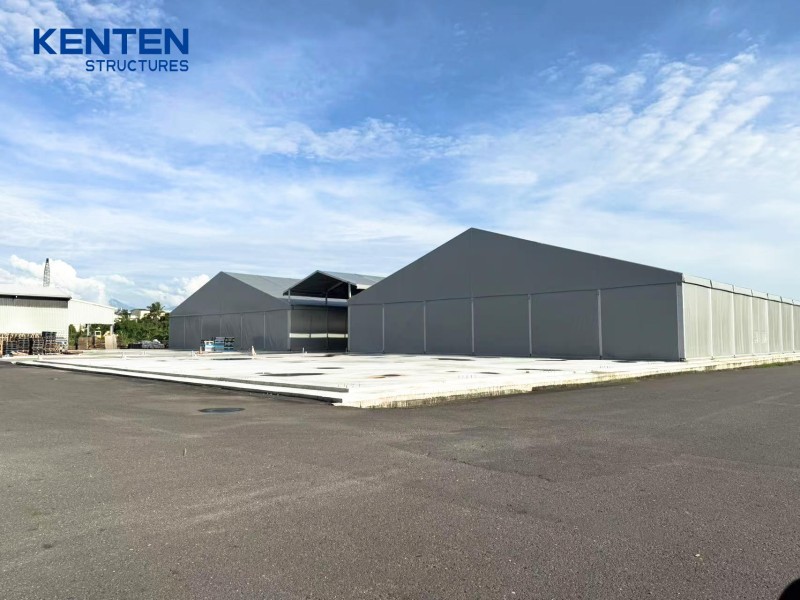
Logistics and warehousing companies use KENTEN aluminum warehouse tents for fast, relocatable clear-span storage during peak seasons and capacity expansion. High eaves, no internal columns and modular design support forklift operations and repeated use.
Aluminum Warehouse Tents for Logistics and Warehousing Companies
Logistics and warehousing operators regularly face mismatches between fixed building capacity and fluctuating inventory volumes. Peak seasons, promotional campaigns, new contract wins or temporary project storage create urgent demand for additional covered space. Permanent construction is often too slow and capital-intensive, while conventional temporary solutions may lack the height, clear span or durability required for professional material handling.
Aluminum warehouse tents (also called industrial storage tents or clear-span storage structures) provide a practical response. These modular systems deliver large, column-free interiors that can be installed quickly, used for months or years, then dismantled and relocated as needs change.
Core Operational Requirements of Logistics and Warehousing Teams
Decision-makers in this sector typically evaluate storage structures against the following criteria:
- Speed of deployment — Capacity must come online in days or weeks, not months.
- Clear-span interior— No internal columns so forklifts, reach trucks and pallet racking can operate freely.
- Sufficient height — High eaves and ridge heights to allow multi-level stacking and safe vehicle movement.
- Weather protection — Reliable resistance to wind, rain and UV exposure to protect goods.
- Relocatability and reuse — Ability to dismantle, transport and re-erect the structure at another site or for the next peak season.
- Total cost of ownership — Lower upfront investment and the option to redeploy the asset multiple times.
- Site adaptability — Installation possible on varied ground conditions with minimal permanent foundation work.
How Aluminum Warehouse Tents Address These Needs
Rapid installation
Prefabricated aluminum frames and membrane covers allow large floor areas to be enclosed significantly faster than traditional buildings. This supports short-notice responses to inventory surges.
Clear-span design
The absence of internal supports maximizes usable floor area and simplifies traffic flow for material-handling equipment. Layouts can accommodate block stacking, selective racking or cross-docking operations.
Height and volume
Typical configurations offer eave heights in the 5–8 m range and higher ridge heights, enabling vertical storage and comfortable clearance for forklifts.
Modular flexibility
Length can usually be extended in standard bay increments (commonly 5 m). Operators can match the structure size to current volume and expand or reduce it later.
Durability for repeated use
KENTEN warehouse tents use high-strength aluminum alloy frames (typically 6061/T6) with corrosion-resistant finishes and robust PVC covers. With proper maintenance, frames support multi-year service life and multiple relocation cycles — a key factor for logistics companies that treat the structure as a reusable asset rather than a disposable expense.
Lower site impact
Compared with permanent warehouses, these structures generally require less extensive foundations. Anchoring methods can be adapted to concrete, asphalt or prepared ground, preserving future site flexibility.
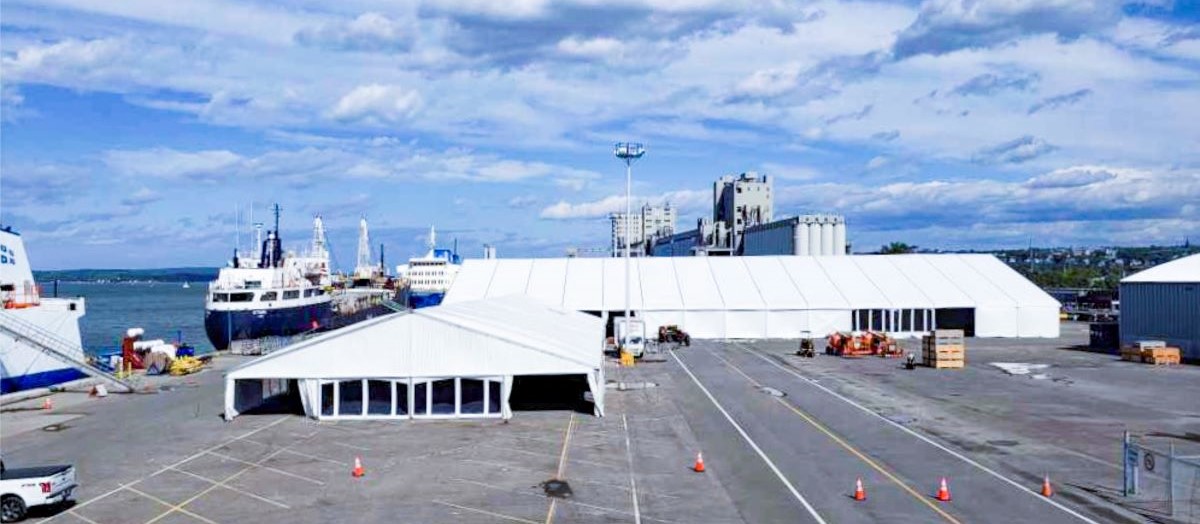
Typical Use Cases in Logistics and Warehousing
- Peak-season overflow storage for e-commerce and retail distribution
- Temporary or semi-permanent expansion of existing distribution centers
- Buffer storage near manufacturing plants or ports
- Project-based or contract logistics storage that has a defined end date
- Relocation of storage capacity between facilities as network needs change
Key Evaluation Points for Procurement and Operations Teams
When comparing warehouse tent options, experienced logistics buyers usually request:
- Clear span width and available eave/ridge heights
- Wind and snow load ratings appropriate to the location
- Frame material specification and expected service life
- Cover material weight, flame retardancy and UV resistance
- Installation programme and crew requirements
- Options for doors, ventilation, lighting and insulation
- Evidence of previous installations in similar logistics environments
- Warranty terms and spare-parts support
Technical documentation and load calculations help internal engineering or safety teams complete their review efficiently.
KENTEN Warehouse Tent Solutions
KENTEN manufactures modular aluminum clear-span warehouse tents designed for industrial and logistics applications. Relevant characteristics include:
- Clear-span interiors with no internal columns
- Configurable spans (commonly in the 10–60 m range and customizable)
- High eave and ridge heights suitable for stacking and vehicle access
- Aluminum alloy frames engineered for repeated assembly and transport
- Durable PVC covers with weather and flame-resistant properties
- Modular length extension
- Production under certified quality, environmental and safety management systems (ISO 9001, ISO 14001, ISO 45001)
These features align with the operational priorities of logistics and warehousing companies that need fast, flexible and reusable covered storage.
Next Steps for Logistics and Warehousing Decision-Makers
To receive an accurate proposal, provide:
- Required clear span and approximate floor area
- Preferred eave height and any specific stacking or vehicle clearance needs
- Expected duration of use (seasonal, multi-year or relocatable)
- Local climate conditions (wind, snow, temperature)
- Ground conditions and any site constraints
- Requirements for doors, access, ventilation or insulation
Detailed specifications, drawings and project references are available through the official channels:
Aluminum warehouse tents give logistics and warehousing companies a proven method to add professional-grade storage capacity quickly, control capital expenditure and retain the ability to adapt or relocate as network demands evolve. When specified against clear operational criteria, they become reliable tools for managing inventory volatility rather than temporary stop-gaps.